Brant content system with Claude Code from Supermega Design. Midjourney/Supermega Design illustration.

By
Markiian Bobyliak
Founder & CEO of Supermega Design
Brand content system in Claude Code
Your agents don't know your brand. A brand content system fixes that
TL;DR A brand content system is a folder of structured files, markdown and YAML, that AI agents read before writing anything for your brand. Voice rules, positioning, banned phrases, calibration examples. The agent loads the right ones for each task and it makes your content sound on brand.
The AI Slop
It’s not a secret that everyone writes with AI nowadays. It’s not a secret that it often is AI slop, neither.
“It wasn’t just X, it was Y”, “This isn’t just about X, it’s about Y”, “Let me dive in”. If you see one of these, you know what to expect from the rest. It’s confident and smart but it’s completely empty.
You can find it on Linkedin in every second post. 2000 characters twitter articles about nothing. Case Studies that could belong to any company. Social posts that sound like they were all written by the same person. Technically, they were. It always goes to the mean.
You can blame AI for that, but you can not eliminate the fact that everyone will write with AI help. The problem is that you ask AI to write for your brand, but it doesn’t know your brand or product. It doesn’t know your voice, your values, what you’d never say. It knows everything about the internet and nothing about you.
So how do you make AI think, write and sound like you?
When Creation Is Easy, Distribution Wins
Nowadays, it’s so easy to create digital things. A website in a day. A blog post in an hour. Social content for a week in one sitting. Everyone has the same tools and everyone can make stuff.
When creation becomes easy for everyone, the advantage shifts to distribution. How consistently you show up across every channel. Whether your LinkedIn post, your case study, your newsletter, and your proposal all sound like they came from one company or one person.
Blog posts, social media, case studies, proposals, website copy, emails. All need the same voice, same quality. One person can not keep up with all of that.
AI can actually help here. Now you can run multiple agents on different parts of your content: research, writing, social, client communications, all at the same time. You direct them, you review, you make sure the quality is there. Doing all of this by yourself is no longer productive.
Your Agents Don’t Know Who You Are
You probably already have a brand guide. A PDF, a Figma file, maybe a design system. Looks great, the result of real work. Your agents can not read any of it.
A PDF is for humans. An agent can technically scan the text, but it loses the structure, the context, the hierarchy. A Figma design system is even less accessible. All that brand knowledge you have is not visible to your agent.
So every time an agent writes something for you it starts from zero. Not knowing your voice, without positioning, not knowing your guardrails. It produces the same generic output. It always goes to the mean.
Agents understand code better than PDF. They need brand description in their language, structured files, markdown, YAML, things they can actually parse and use. Every brand now needs two guides: a visual guide in Figma for humans and a brand guide in code for agents.
Brand Content System in Claude Code
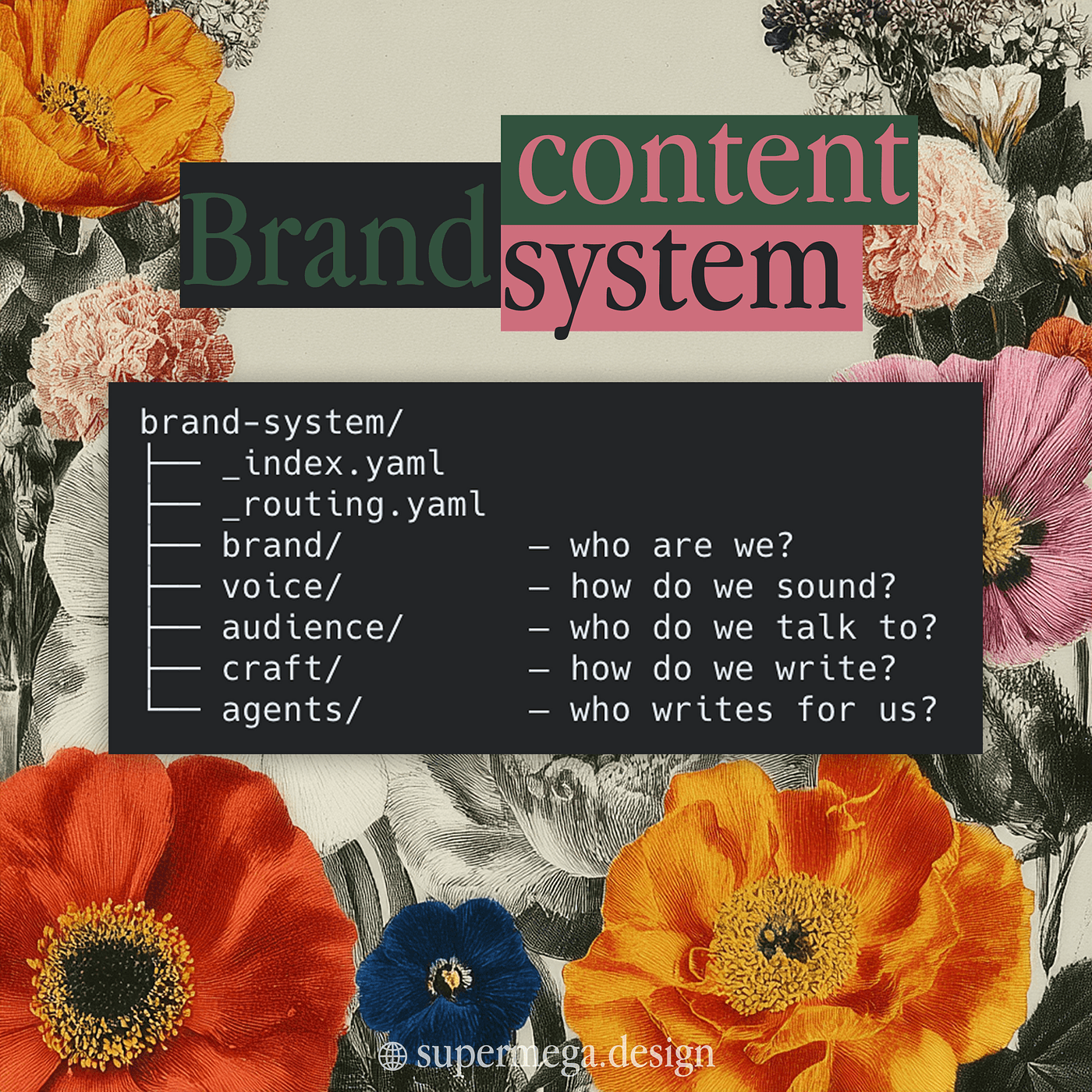
We built a brand content system in Company Directory on my Mac, next to all of our design files and client work. It’s a separate folder with a markdown and YAML files. We structured it into five folders, each containing answers for agent about the brand.
Each folder has a few files. Files covers one concept: our voice rules, our positioning, who we write for, what we never say, etc. Each has about 400 tokens.
We found out that this is the perfect size for the file. Small enough to load several at once without eating up the agent’s context window. Big enough that each file is self-contained.
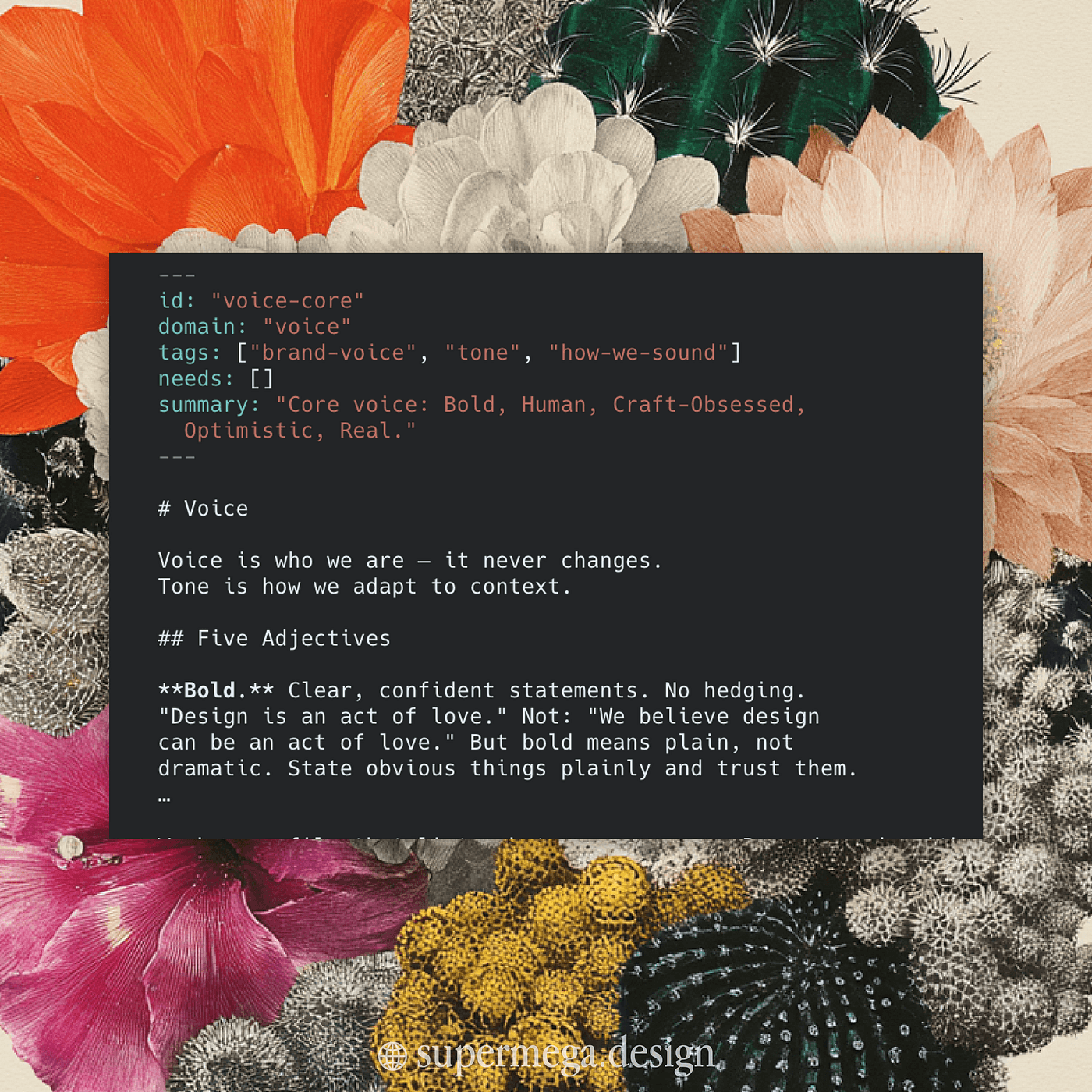
Every file has a bit of YAML metadata at the top, then the actual brand knowledge below. This is our voice definition:
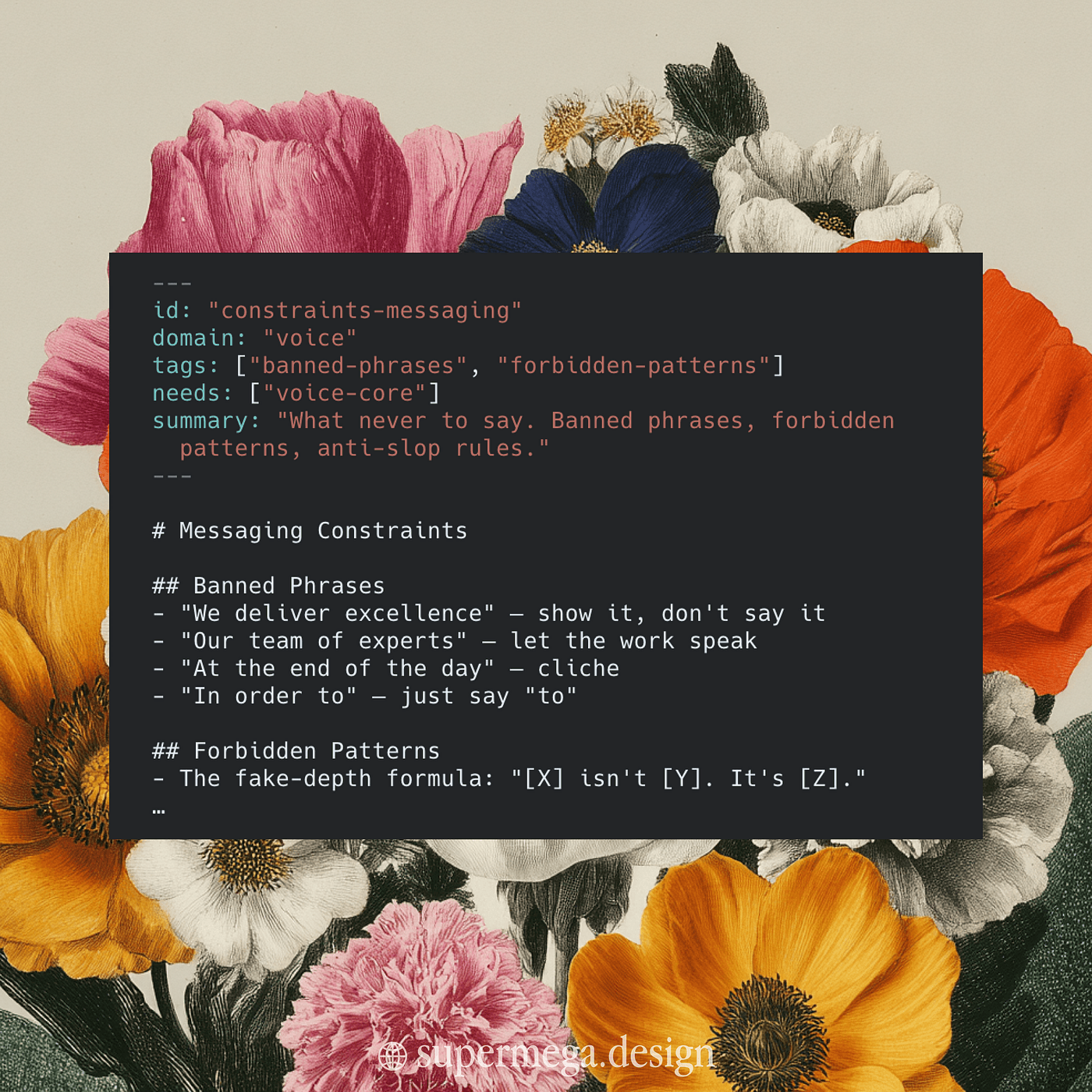
We have a file that lists what we never say. Banned words with reasons, banned phrases, specific AI patterns to catch:
Claude Code loads a CLAUDE.md file at the start of every session. It says: “before any writing task, read these core files”. How we sound. Who we are. What we never say.
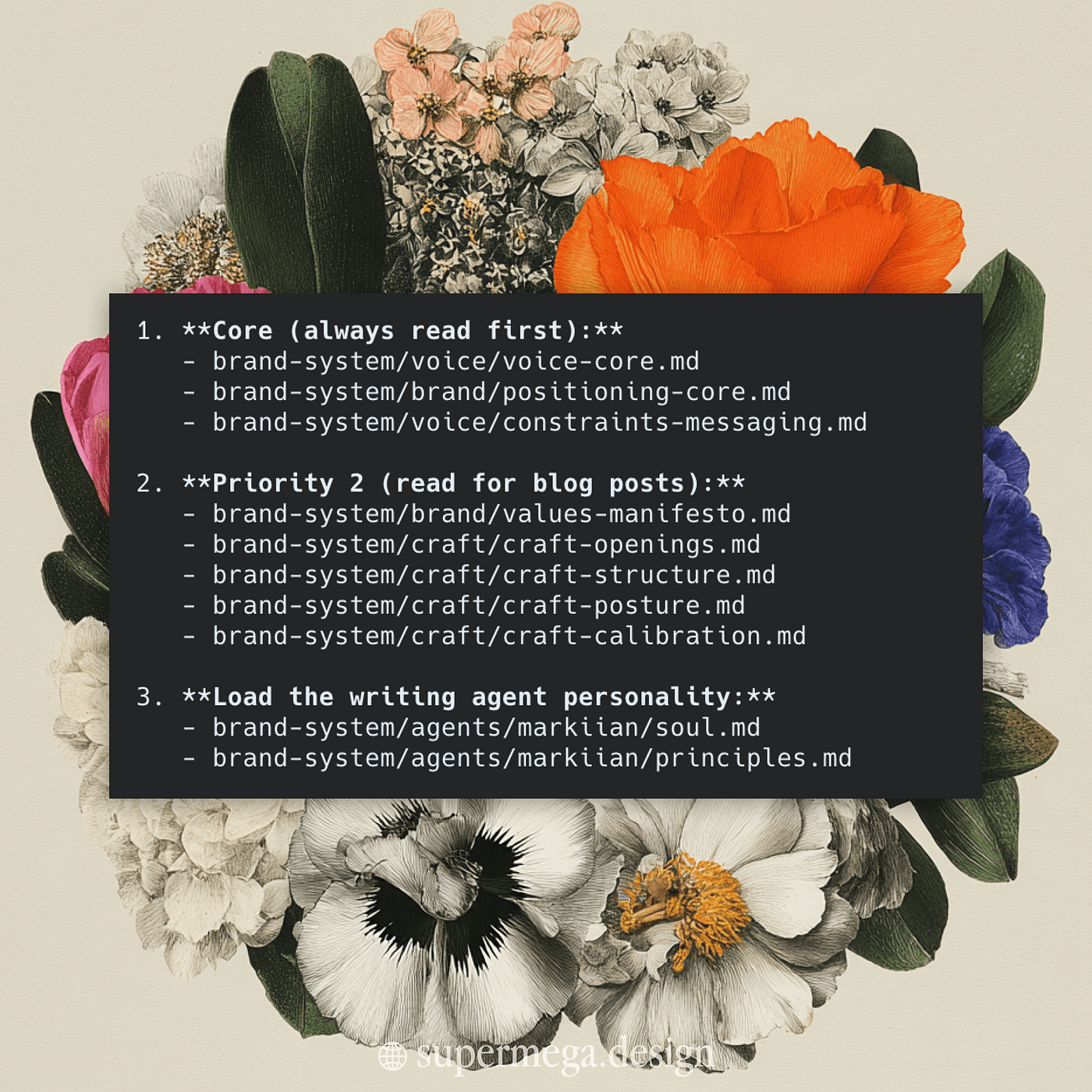
A blog post gets craft rules and the writing personality. A proposal gets services and the client persona. A style edit gets the constraints and the calibration pairs.
We built skills on top of this, shortcuts that handle the routing automatically. Type /write-blog-post and the agent loads everything it needs:
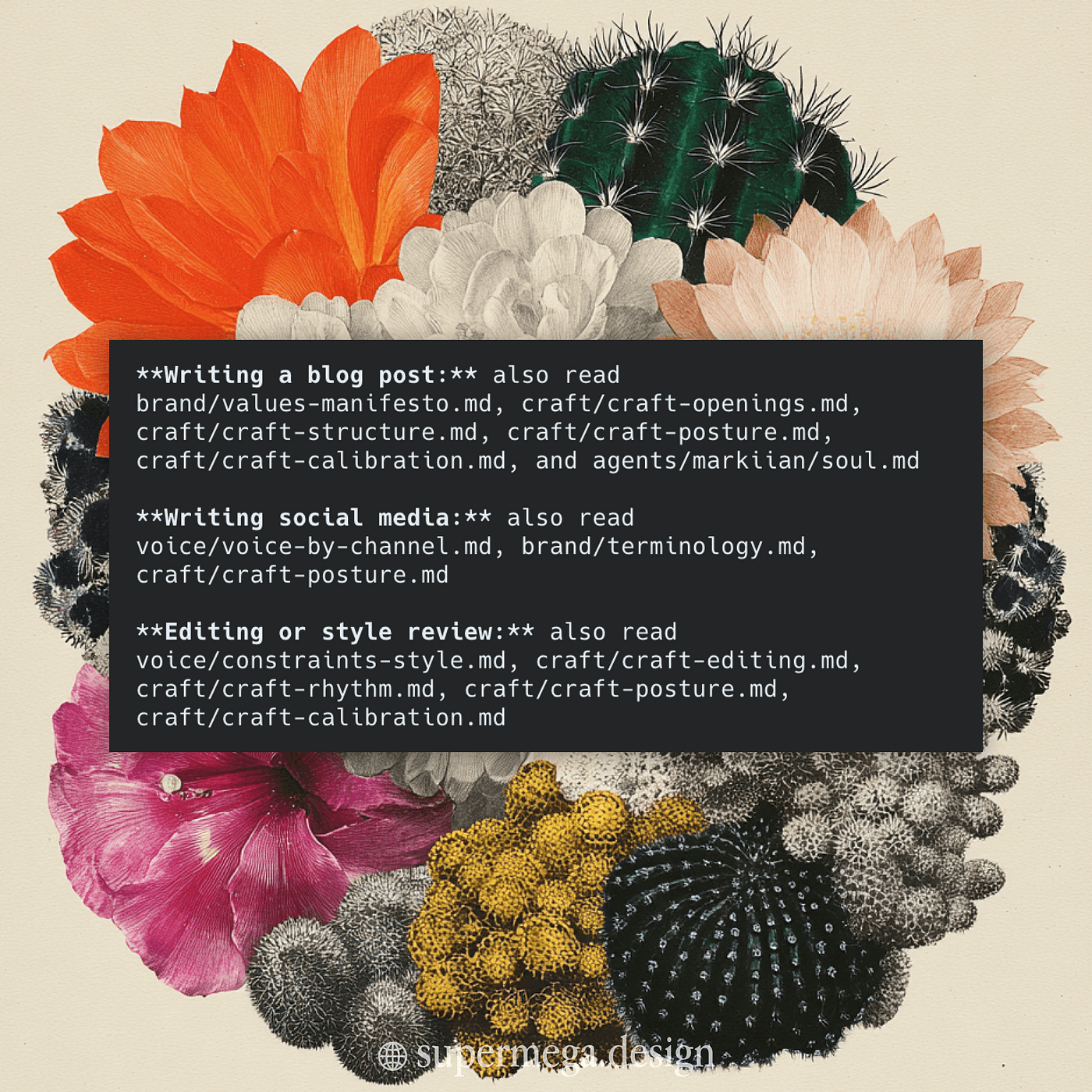
We also have personality files for the writing agent. It’s separate from the brand voice. Personality defines how a specific person thinks and writes.
We do this for ourselves and deliver it for every client project, be it brand or product. The human layer: Figma files, PDFs, design system, visual guidelines. And the agent layer: the brand content system folder. A client using Claude Code or Cursor drops the folder into their project and their agents immediately have voice, positioning, terminology, guardrails. The brand system lives in version control next to the code. When the brand evolves, you update the file and every agent picks up the change.
Creative Directors Become Directors
Content distribution by yourself does not scale. Blog posts, social media, case studies, proposals, emails. One person can not keep up with all of that.
But now you can run several agents at the same time. One writes a blog post. Another drafts social for the week. A third reviews a client proposal. They all work using the same brand system and they all know your voice, your positioning, your values. They all sound like you.
It works like directing a film. The director doesn’t operate the camera, doesn’t act in the scenes, doesn’t edit every frame. But every frame reflects their taste because they set the rules and reviewed the output.
This scales in a way that personal effort never did. One person directing that system produces more consistent output across more channels than a team of writers who never fully internalized the brand guide.
And the quality actually gets more consistent. An agent loading the same brand files produces the same baseline every time. You elevate from there.
Everyone writes with AI. That is not changing. But with a brand system loaded, your agents stop going to the mean. They know your voice, your values, what you would never say. They know everything about the internet and something about you.
The brand content system covers how you sound. How you look is another problem we are focusing on now. A brand agent that can create high quality visuals for your brand and product. Stay tuned.
© 2024 – 2026 Supermega Design